

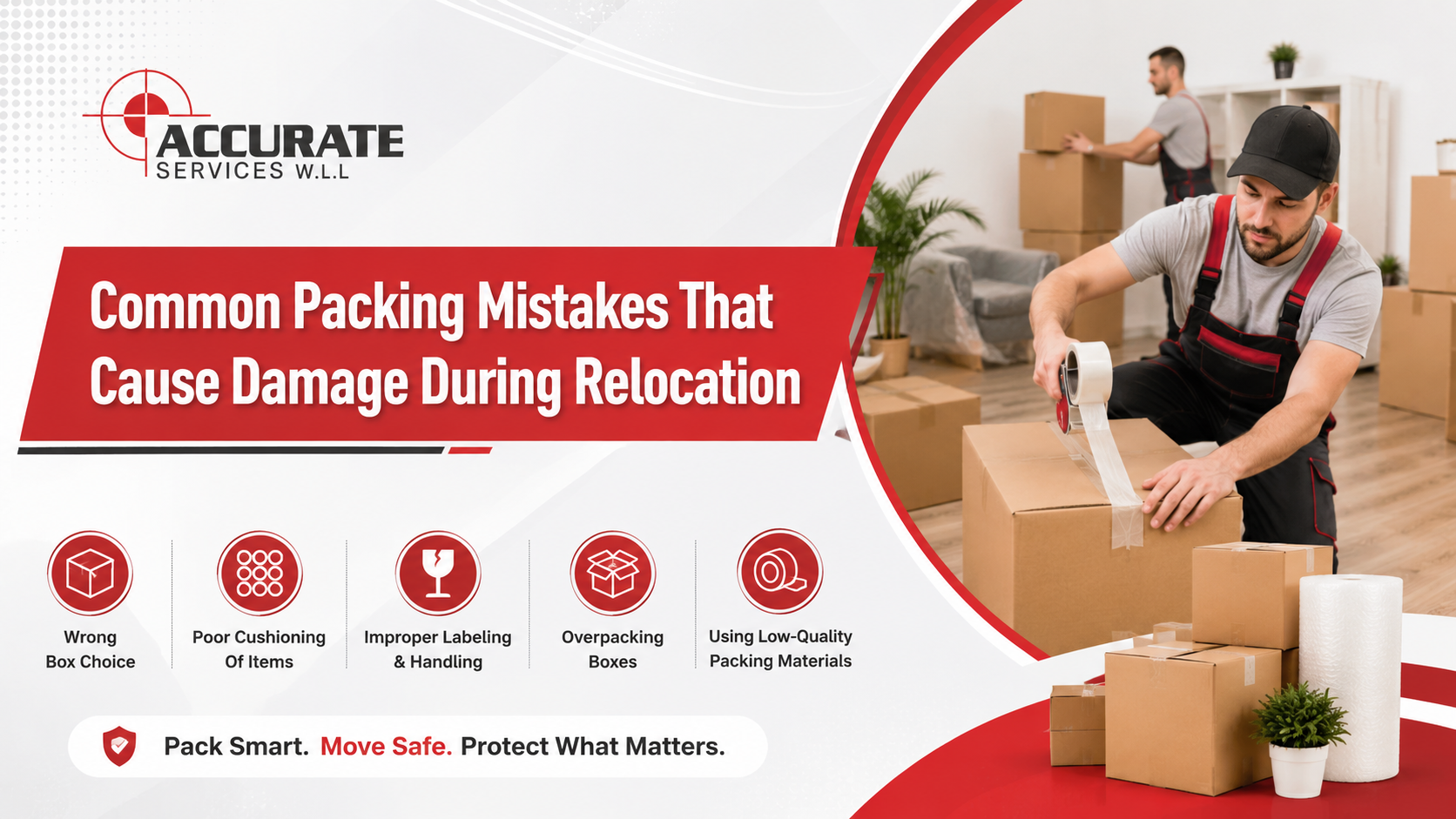
Moving damage is rarely the result of the uneven route of a moving truck. But the real trouble, more often than not, begins much earlier, when packing. If the TV is tightly packed, a container suddenly full of overflowing, or more likely than not, a glass shelf without protection, you may take out of the transfer at a very large cost.
Whether you are moving to a nearby apartment or you are planning for an international relocation, correct packing can protect local and international relocations. From packing your furniture, appliances, documents to personal things, proper packing can protect local and international relocations. But many people would rush through this stage because packing looks easier than it is.
We have many visitors to Accurate WLL who have learned from experience how small packing mistakes often result in scratches, cracks, moisture damage, broken corners and missing items. So, knowing the most common mistakes would prevent you from making these mistakes and ultimately prepare you for smoother moving.
Why Proper Packing Matters During Relocation
Residential Professionals pack other things. It handles movement, pressure, moisture, vibration and shock from the start to finish of this journey.
When loading, cartons can be stacked several layers high. In the meantime, the vehicle may encounter unexpected braking, road shocks, temperature changes or constant handling. Items that seem solidly in place at home might move or break while being transported. Get details on International Movers in Bahrain
Quick Comparison: Safe Packing vs Risky Packing
|
Packing Area |
Common Mistake |
Possible Damage |
Better Practice |
|
Carton selection |
Using old or weak boxes |
Box collapse and crushed items |
Use strong, double-wall cartons |
|
Weight control |
Overloading large boxes |
Torn cartons and damaged contents |
Keep heavy items in small boxes |
|
Cushioning |
Leaving empty spaces |
Items collide during transit |
Fill gaps with packing material |
|
Fragile goods |
Wrapping pieces together |
Glass and ceramic breakage |
Wrap each item separately |
|
Labelling |
Writing only the room name |
Mishandling and confusion |
Add contents, room, and handling notes |
|
Electronics |
Packing without moisture protection |
Corrosion and internal damage |
Use anti-static and moisture-safe packing |
|
Furniture |
Moving without edge protection |
Scratches, chips, and dents |
Cover corners and wrap surfaces |
1. Using Weak or Previously Damaged Boxes
One common packing mistake made with the boxes you utilize when you move home. Wet cartons, containers with torn tops and grocery boxes may look like they can be reused but they tend to collapse under a load.
And old boxes can hold bacteria, dust, pests, scuff marks, or even smelly filth. Handling cartons via stairs can create a plethora of problems notably from carton collapse at the bottom.
Use good quality fluted cartons instead. Use double-wall boxes for books, kitchen appliances, tools and other heavy items.
2. Choosing the Wrong Box Size
In this case, there are two concerns with putting heavy items in huge boxes. The first thing that happens is the package gets heavier. Secondly, all the increased space makes the things move.
Books can fit in smaller cartons, while cushions and linens can fit in bigger boxes, when you think about it. The safety and handling are improved when any item’s weight is matched with the correct carton size.
Most home containers that may be handled safely can weigh up to about 15 or 20 kg. The ideal limit will depend, of course, on the strength of the box and the liquid contained in it. Looking For a Office Relocation Experts in Bahrain ?
3. Overpacking Cartons
People often try to reduce the number of boxes by forcing too many items into one container. Although this may appear economical, it increases the chance of torn seams, broken handles, crushed goods, and lifting injuries.
Moreover, an overfilled box cannot close properly. Workers may then stack another carton on its uneven surface, which creates instability.
Leave enough space to add protective cushioning. After that, close the top flaps naturally without pressing them down with force.
4. Leaving Empty Space Inside Boxes
Underpacking is equally as dangerous as overpacking. If a carton contains empty spaces, the contents will slide, bang together and hit the walls of the carton during transit.
Fill the empty spaces with packing paper, bubble wrap, foam, air pillows or clean cloth. Shake the sealed package lightly before loading it. If you hear movement, open it up and add more padding.
This simple test can prevent a surprising amount of damage.
5. Wrapping Fragile Items Together
Individual protection of glass, crockery, mirrors, ornamental items and ceramics. But some individuals stack these up and then wrap the whole thing in one bundle.
This makes the surfaces rub or hit against each other. Even a little vibration might cause cracks to appear.
Individually wrap each item. Also, arrange stand plates vertically rather than horizontally as vertical positions tend to deal better with pressure. Use carton dividers for glasses, mugs, bottles and delicate ornaments. Get details on Warehouse Relocation in Bahrain
6. Using Newspaper Directly on Valuable Items
Newspaper might offer some basic cushioning but its ink can transfer onto fabrics, ceramics, lampshades and light-coloured surfaces. Thin newsprint also offers little protection from impact.
Use clean packing paper as the first layer. Then bubble wrap can add extra protection around fragile objects. Newspapers can still be used to cover empty spaces in cartons, but should not come in close contact with expensive things.
7. Failing to Protect Furniture Corners
“Edges of tables, cupboards, wardrobes, workstations and bed frames commonly get damaged. Chipping can occur at any corner near a doorway, stairway, lift or a truck wall.
So utilize corner guards, foam sheets, corrugated cardboard, moving blankets and stretch film. But don’t leave a plastic sheet on top of polished wood for any length of time, since it might retain moisture and harm the gloss.
Professional movers may also use custom crating for high-end furniture items.
Related Services:
» Corporate Relocation Company in Bahrain
» International Relocation Company in Bahrain
» Moving from Bahrain to Qatar
» Pet Relocation Company in Manama
» International Relocation Company in Dubai
» International Relocation Company in Sharjah
» Business Relocation in Riffa
» International Relocation Company in Abu Dhabi
» Office Relocation Services in Bahrain
8. Packing Electronics Without Proper Preparation
Electronic goods require more than just a cardboard box. Televisions, computers, sound systems, gaming devices etc have delicate internal hardware that can be impacted by impact, moisture and static electricity.
Back up important data before packing. Then, you will want to unplug all of the cables and take pictures of where everything connects. Tag bags with tents for various sets of accessories so that they will not mix together.
Use the original packaging if possible. If not, use a solid box with rigid foam. In addition to long-distance or overseas moving, moisture-absorbing sachets may offer further protection from equipment.
9. Forgetting to Secure Appliance Parts
Much of this movement will come from removable sections such as washing machine drums, refrigerator shelves and microwave trays. As a result, they can cause further cracking or damage the appliance from within.
Displace all pet trays, plates, racks and equipment readily made. Pack each component individually and use a marker to clearly mark it. Also drop off and discard water from washing machines, filters, pipes and refrigerators before packing.
Appliances need to be cleaned and dried too. Any small amount of water that is trapped can create mould or a nasty odour over a long journey.
10. Packing Liquids Without Leak Protection
Bottles sometimes leak owing to loose caps during handling with cleaning items, toiletries, oils, sauces and cosmetic bottles. Just one container that leaks can ruin other nearby clothes, books, documents and electronics.
First, tighten every cap. Then, wrap some plastic film on the opening, and put the cap back. Put the bottle into a zip-locked bag and keep it straight up.
Most importantly, verify whether the product is allowed by the moving company. Restrictions against flammable liquids, compressed cans, chemicals that are corrosive as well as specific paints. Get details on Corporate Relocations
11. Poor Labelling and Inventory Control
Writing “bedroom” on a box does not provide enough information. Movers need to know whether the carton contains clothes, books, electronics, or fragile décor.
Use labels such as:
FRAGILE – GLASSWARE – KITCHEN – KEEP UPRIGHT
Also, number every carton and prepare a simple inventory list. For example, “Box 12: Books and office files.” As a result, you can quickly identify missing items and organise unpacking without opening everything.
Avoid writing a detailed list of expensive contents on the outside. Instead, use a private inventory sheet for valuables.
Related Articles:
» Essential Guide to Corporate Relocations in Bahrain
» Top European Relocation Destinations
» International Movers in Bahrain Handle Door-to-Door Relocation
» Mistakes to Avoid When Moving Internationally from Bahrain
» Mistakes to Avoid When Moving Internationally from Bahrain
12. Packing Essential Items With the Main Shipment
Medicines, passports, jewelry, chargers, house keys, work documents immediately vanish to the moving truck with a set of clean clothes.
Pack a essentials bag that is specifically for moving and will typically cover you the first 24 to 48 hours Come with toiletries, identification documents, essential tools, fiber dietary supplements together with snacks and drinking water any device chargers a child’s wishes.
This step is crucial also for overseas relocation as delivery of shipments may take days or weeks.
13. Sealing Boxes With Insufficient Tape
One strip of low-grade tape simply can not support a loaded box. Transportation can weaken even poor adhesive in the presence of dust, heat or humidity.
Encourage the use of sturdy packaging tape and put it over the main seam as well as two side seams in an H shape. Also, make sure to support the bottom of boxes with anything heavy.
Forget masking tape or ordinary stationery tape. These were not meant to hold the carton in place while it is being moved. Looking For a Relocation to Bahrain
14. Waiting Until the Last Minute
Rushed packing leads to mixed items, weak wrapping, missing labels, and accidental disposal of important belongings. Moreover, last-minute packing makes it difficult to separate restricted goods and essential documents.
Start with items you rarely use. Then, pack room by room and complete one section before moving to another. A planned schedule creates fewer mistakes and makes relocation day much calmer.
How Accurate WLL Helps Prevent Packing Damage
Accurate WLL is a professional worldwide packing & moving services to move your goods like household items, office items, furniture, electronic items etc in packed containers.
Our team selects relevant materials based on the type of item, method of handling, destination and travel time. In addition, we can help with dismantling, protective wrapping, carton labeling, inventory preparation, loading and unloading.
Instead of having a single packing technique for everything we analyse the risk and pack accordingly for each and every article. This helps your lenses move less, reducing risks of pressure or scratches and exposure to moisture and handling damage.
Final Packing Checklist
Before the moving vehicle arrives, confirm that:
- Every carton closes without bulging.
- No item moves when the box is gently shaken.
- Fragile cartons carry clear handling labels.
- Heavy goods remain inside small, reinforced boxes.
- Liquids stay sealed and separated.
- Furniture edges and corners have protection.
- Appliances are clean, dry, and secured.
- Important documents remain with you.
- Every carton appears on the inventory list.
FAQs: Common Packing Mistakes
Some of the most unheard mistakes many people make include using a wrong box, leaving space empty etc. In both problems, items may shift, collapse, or collide in transit.
Most of the home cartons must be less than about 15 to twenty kilograms. On the other hand, large record cap 1 boxes should be reserved for heavy items like books, tools and kitchen objects.
The bubble wrap does help, but won’t do the job entirely on its own. Also, make use of heavy-duty boxes, separate packing for each item, void fillers, and dividers and fragile labels to securely store items.
You may use clean, strong cartons for packing and not using damaged, wet, soft or excessively folded boxes. Some things such as weak boxes collapse when overloaded in the stack.
Wrap every plate individually, insert padding between them, and pack them upright into a heavy-duty carton. Before sealing the box, fill in all empty spaces.
Use moving blankets, foam sheets, corner guards, cardboard panels, and stretch film. Additionally, dismantle removable sections when practical.
Usually, drawers should be emptied because their contents add weight and may shift. However, lightweight fabric may sometimes remain inside if the mover approves it.
Use the original television box when available. Otherwise, protect the screen with soft foam, cover the unit, secure it inside a suitable TV carton, and keep it upright.
Take passports, money, jewellery, medicines, legal papers, keys from different locations and keep them on you along with other valuables The others, including hazardous materials, may not be allowed.
These labels clearly guide movers in identifying the contents of the boxes, prevent improper stacking, and make it easier for one to unload on a room-to-room basis thus reducing time for unpacking.
Yes. Professional moving companies generally supply cartons, tape, bubble wrap, foam, protective blankets, stretch film, and specialised packing materials based on the service booked.
Accurate WLL combines suitable packing materials with careful handling, systematic labelling, secure loading, and practical relocation planning. Therefore, customers receive stronger protection for their belongings throughout the move.