

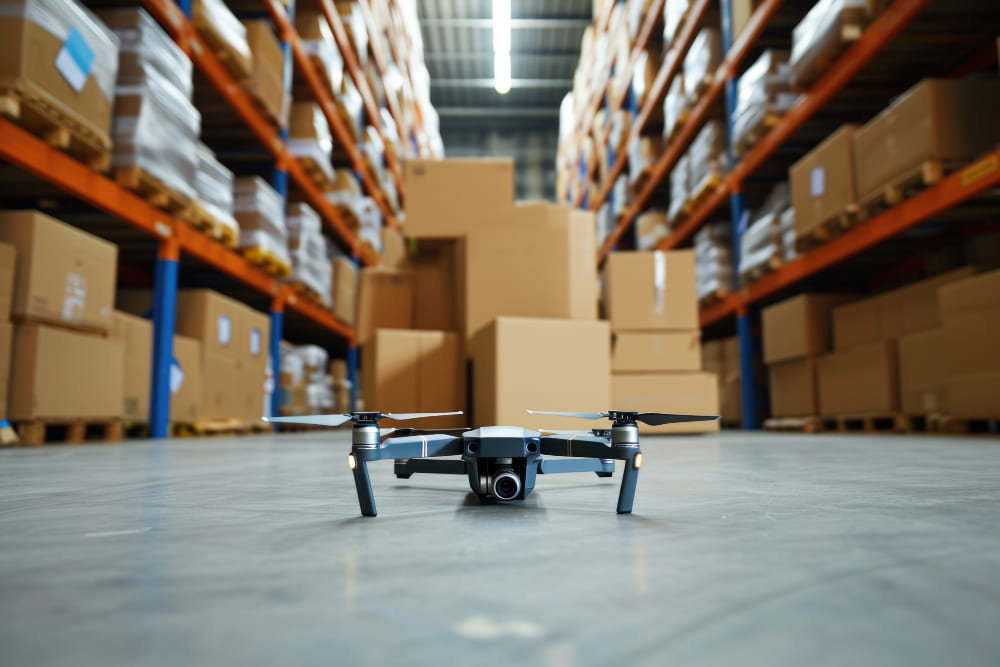
Bahrain’s warehousing sector is undergoing a transformation. For years, operators obsessed about predictive storage — leaning on historical inventory patterns, demand forecasts and seasonal tendencies to determine where a stock should rest and when it should move. But in 2026, that model is insufficient all on its lonesome. Warehouses require systems that do much more than forecast. They require systems that can reason, make decisions, initiate workflows, coordinate with teams and react in real time. That’s where agentic AI starts to come in.”
This shift is especially pertinent for Bahrain. The Kingdom already has a robust logistics base, with rapid connections between the Bahrain Logistics Zone, Khalifa Bin Salman Port and Bahrain International Airport as well as into the Saudi market via the King Fahd Causeway. According to official sources in Bahrain, 75% of Saudi Arabia’s economy is within a neighboring few hour reach from Bahrain, and the Bahrain Logistics Zone is conveniently located near the port, airport and industrial space. Bahrain also continues to promote itself as a cost-competitive GCC logistics base.
That local edge is becoming increasingly important during the second half of this decade. A Bahrain warehouse in 2026 is not only evaluated on the racking space available. What customers want instead is speed, visibility, accuracy, resilience, customs-readiness and cross-border responsiveness. As a result, the smart warehouse is transforming from a place that stores shelves into a decision-making nerve center. In addition, Bahrain’s sound digital infrastructure such as supported by the AWS Middle East (Bahrain) Region and increasing edge-data activity as well as its practical positioning where it could help implement further AI logistics workflows means that this initiative from Zatca is going to be beneficial for both nations.
What Is Agentic AI in Warehousing?
Agentic AI refers to AI systems that do not just analyse data and display recommendations. Instead, they can pursue defined goals, break work into steps, connect with tools and systems, and take bounded action under human-set rules. Deloitte describes agentic AI as systems that can reason, plan, and act with autonomy, while Microsoft’s 2026 inventory-to-deliver guidance frames agents as a way to turn inventory management from a reactive task into a strategic, connected function.
In warehousing, that means an AI layer can go beyond:
- forecasting stock demand,
- flagging slow-moving items,
- suggesting put-away zones.
Instead, it can actively:
- re-prioritise receiving queues,
- trigger cycle counts,
- recommend slotting changes,
- coordinate vendor communication,
- rebalance stock,
- optimise inbound loads,
- alert managers to congestion risks,
- and escalate exceptions before they become costly delays.
So, the big difference is simple:
|
Model |
What it does |
|
Predictive storage |
Predicts what may happen |
|
Agentic warehousing |
Predicts, decides, coordinates, and acts within guardrails |
That shift is important because warehouse teams often lose time not on physical handling, but on handoffs, approvals, manual follow-ups, spreadsheet updates, and exception management. Agentic AI tackles that hidden operational drag. Get details on Moving from KSA to Latvia.
Why Bahrain Warehousing Is Ready for Agentic AI
Bahrain’s logistics case is not based on hype. It is based on location, infrastructure, and operating economics.
The Bahrain Economic Development Board states that Bahrain offers highly competitive logistics operating costs, fast freight turnaround, and direct trade connectivity. Its 2026 logistics factsheet highlights duty-free access covering 25 countries representing 33% of world GDP, while Bahrain’s logistics positioning rests on close access to Saudi Arabia, sea links, and airport connectivity. Official Bahrain and EDB sources also emphasise short transit times between logistics assets and continued investment in infrastructure.
Even more importantly for warehouse investors, EDB’s 2024 annual report says Bahrain offers the most cost-effective environment for logistics businesses in the GCC, with costs up to 69% lower in some benchmarks. Meanwhile, the EY logistics cost study cited by EDB found the Bahrain Logistics Zone to be the most competitive location in its comparison for a temperature-controlled warehouse case study, at an annual operating cost of US$1.476 million, about 20% below the average in that benchmark.
That combination creates a very practical formula:
good location + lower operating pressure + digital infrastructure = better conditions for AI-led warehousing.
In other words, Bahrain warehouses do not need to copy the largest global automation models on day one. They can start with focused, high-value agentic use cases that improve throughput, stock accuracy, labour utilisation, and client response times. Looking for a Moving Service from KSA to Liechtenstein?
From Predictive Storage to Agentic Flow
Traditional predictive storage solves one narrow problem: where stock should sit based on expected demand.
However, modern warehousing needs to solve a chain of connected decisions:
- What is arriving today?
- Which inbound loads need priority unloading?
- Which products need temperature-sensitive handling?
- Which SKUs should move closer to dispatch lanes?
- Which orders risk late fulfilment?
- Which bins require recounting?
- Which supplier delays will affect tomorrow’s picking plan?
- Which shipments should be routed for Saudi delivery windows?
An agentic warehouse does not wait for five managers to answer those one by one. Instead, the system can assemble data from the WMS, ERP, IoT sensors, order history, labour schedules, transport feeds, and customer priorities, then recommend or trigger the next best action. NVIDIA’s warehouse AI command-layer blueprint describes this as an AI layer sitting above WMS, ERP, and IoT systems to convert fragmented data into real-time operational intelligence.
Therefore, the conversation in 2026 is no longer about “Can AI forecast demand?” The better question is: Can AI help the warehouse run itself more intelligently, minute by minute, with human oversight?
High-Value Use Cases for Bahrain Warehouses in 2026
1. Smart receiving and dock scheduling
Agentic AI can monitor inbound truck timing, available dock slots, labour capacity, and product urgency. Then it can sequence unloading in the right order. This matters in Bahrain because cross-border and port-linked operations often deal with time-sensitive movements and multi-client warehousing.
2. Dynamic slotting
Instead of using monthly slotting reviews, agents can continuously recommend better product placement based on order velocity, product compatibility, temperature needs, and replenishment cycles. Microsoft’s Warehouse Advisor Agent example specifically points to slotting, inventory consolidation, and cycle counting as automation opportunities.
3. Inventory rebalancing
In multi-zone or multi-client sites, agents can identify overstock, understock, or duplicated slow-moving inventory and propose internal rebalancing before stockouts or congestion hit.
4. Cycle count orchestration
Rather than scheduling counts by calendar alone, agentic AI can assign count priority based on anomaly signals, high-value SKUs, recent discrepancies, or outbound urgency.
5. Cold-chain exception response
For temperature-controlled warehousing, AI agents can watch sensor feeds, energy use, and door-open durations, then escalate issues immediately or trigger contingency workflows.
6. Labour and task balancing
Warehouse teams often struggle with idle pockets in one area and overload in another. AI agents can redistribute tasks based on order mix, inbound pressure, and live floor conditions.
7. Client communication automation
Agents can automatically draft shipment updates, supplier follow-ups, discrepancy alerts, and delay explanations with human approval where needed. Microsoft’s supply chain examples show vendor communication as a near-term practical use case.
8. Saudi corridor readiness
Because Bahrain is deeply tied to Saudi-bound logistics, warehouses can use agentic AI to align dispatch timing, customs documents, and route planning with delivery windows and congestion scenarios. Get details on Moving from KSA to Luxembourg.
Core Technologies Behind the Agentic Warehouse
The strongest 2026 warehouse models do not rely on one AI tool. They rely on an ecosystem.
|
Technology layer |
Role in the warehouse |
|
WMS / ERP integration |
Connects stock, order, and finance data |
|
IoT sensors |
Feeds temperature, movement, door, and equipment data |
|
Computer vision |
Monitors pallets, lanes, congestion, and safety events |
|
AI agents |
Reason, prioritise, coordinate, and act |
|
Digital twins |
Simulate warehouse layout and flow changes |
|
Cloud + edge computing |
Handles real-time processing with lower latency |
|
Observability & governance |
Tracks agent decisions, performance, and exceptions |
NVIDIA positions digital twins and physical AI as part of the move toward more intelligent industrial and warehouse environments, while Microsoft highlights agent-ready ERP foundations for end-to-end inventory-to-deliver workflows.
Estimated Cost Ranges for Agentic AI Adoption in Bahrain Warehousing
The table below gives directional planning ranges, not fixed quotations. They are included for budgeting discussions and converted into CAD using an approximate mid-April 2026 rate of 1 BHD ≈ 3.65 CAD.
|
Deployment stage |
Typical scope |
Estimated budget (BHD) |
Approx. cost in CAD |
|
AI readiness assessment |
Process mapping, data audit, use-case prioritisation |
8,000–20,000 |
29,200–73,000 |
|
Pilot agent for one workflow |
Dock scheduling, slotting, or cycle counts |
25,000–60,000 |
91,250–219,000 |
|
WMS + ERP integration layer |
Data connectors, dashboards, basic orchestration |
35,000–90,000 |
127,750–328,500 |
|
Computer vision / sensor upgrades |
Cameras, gateways, edge devices, monitoring |
20,000–75,000 |
73,000–273,750 |
|
Multi-agent operations layer |
Inbound, inventory, labour, and exception agents |
80,000–220,000 |
292,000–803,000 |
|
Digital twin and advanced simulation |
Layout optimisation, throughput simulation |
60,000–180,000 |
219,000–657,000 |
|
Enterprise-scale rollout |
Multi-site orchestration with governance |
250,000+ |
912,500+ |
For context, these investment levels often make more sense in Bahrain because the operating base can already be cost-competitive. In the EY benchmark cited by EDB, BLZ’s annual operating cost for a temperature-controlled warehouse was US$1.476 million, versus US$2.49 million for the highest-cost comparator in that study. That difference shows why many operators prefer to improve decision quality and workflow speed before overspending on heavy physical automation.
Expected Business Impact
When implemented correctly, agentic AI can improve warehouse performance in five meaningful ways.
Faster decisions
Instead of waiting for cross-functional meetings, the warehouse gains a live operational brain.
Lower working capital pressure
Better rebalancing and more accurate replenishment reduce unnecessary stockholding.
Higher service accuracy
Orders move with fewer mis-picks, fewer allocation errors, and stronger exception handling.
Better labour productivity
Teams spend less time on chasing data and more time on execution.
Improved resilience
Agentic systems can monitor continuously, react earlier, and scale logic across more tasks than manual teams alone. Deloitte notes that agents can support always-on monitoring, high-frequency decision-making, and execution beyond normal human bandwidth. Looking for a Moving Service from KSA to Malta?
What Accurate WLL Should Emphasise on This Topic
For a Bahrain-focused warehousing brand, the strongest message is not “AI is replacing people.” The smarter message is this:
Agentic AI helps warehouse teams work with more speed, more visibility, and fewer costly blind spots.
That positioning is important because many warehouse operators still worry about disruption, retraining, and system complexity. So the better sales narrative is practical:
- start with one workflow,
- connect existing systems,
- build guardrails,
- measure results,
- then scale.
That approach fits Bahrain’s market well. Many regional warehouse clients do not need a futuristic fully autonomous site. They need a smarter one. They need a warehouse that can think ahead, coordinate faster, and keep goods moving across Bahrain, Saudi Arabia, and the wider Gulf without friction.
How to Start in 2026
A realistic roadmap looks like this:
|
Phase |
Priority |
|
Phase 1 |
Audit data quality, stock accuracy, and workflow delays |
|
Phase 2 |
Choose one high-impact use case such as slotting or inbound scheduling |
|
Phase 3 |
Integrate WMS, ERP, and sensor feeds |
|
Phase 4 |
Deploy a supervised agent with human approval checkpoints |
|
Phase 5 |
Measure KPI gains in accuracy, dwell time, throughput, and labour use |
|
Phase 6 |
Expand to multi-agent orchestration and digital-twin planning |
The early movers will probably gain more than efficiency. They will also earn customer trust, as clients strive for warehouse partners who can offer real-time visibility, proactive updates and dependable cross-border execution.
Related Articles:
» Moving from KSA to Azerbaijan
Redefining Warehouse Intelligence in Bahrain’s Digital Economy
Agentic AI in Bahrain warehousing is not just another technology trend for 2026. It is the next operational layer for businesses that want to move beyond static storage and delayed decision-making
Bahrain has the right fundamentals already: good logistics positioning, quick access to Saudi Arabia, close proximity between sea-air-land networks, cost competitiveness and a growing digital capability. What has now changed is the warehouse mentality. Yes, storage is not the final destination anymore. Intelligent flow is.
The warehouse of the future in Bahrain will still require skilled people, disciplined processes, and robust infrastructure. But it will also need A.I. agents capable of monitoring, reasoning and acting within defined rules. Warehouses that embrace that model will not just store goods more effectively. They will meet markets faster, minimize waste sooner and make better choices every day.
For brands like Accurate WLL, it builds for a compelling market narrative in 2026: Bahrain is now more than a place to store supplies. It is a hub for smarter warehousing operations in the Gulf.
FAQs: Agentic AI in Bahrain Warehousing: Moving Beyond Predictive Storage
In the context of warehousing, agentic AI refers to AI systems that are capable of analysing data and making decisions, coordinating workflows accordingly and triggering actions based on permissible rules.
Predictive storage predicts demand and placement. Agentic AI also decides what should happen next and assists in executing it.
Bahrain has good logistics connectivity, Saudi Arabia access, cost advantages and increasingly sophisticated digital infrastructure that makes AI warehousing more feasible.
Yes. It helps to decrease waste, maximise use of labour, minimise stock errors and enable better planning.
No. Even mid-sized warehouses could begin with one of these, cycle counting, slotting or dock scheduling.
Typically, this requires connections to the WMS, ERP, IoT sensors, order systems and reporting tools.
Yes. It can monitor temperatures, detect anomalies, and escalate issues faster in temperature-sensitive storage environments.
No. In most real deployments, it supports staff by removing repetitive coordination work and improving decision speed.
A good starting point is often dynamic slotting, receiving prioritisation, or inventory exception management.
Entry-level projects can start around CAD 29,200 to CAD 73,000 for readiness work, while larger multi-agent programmes can exceed CAD 292,000 depending on scope.
Yes. It can help coordinate stock readiness, dispatch sequencing, document workflows, and delivery timing for Saudi-bound movements.
A smart warehouse in 2026 will combine real-time visibility, AI-assisted decisions, connected systems, faster fulfilment, and strong human oversight.